How AI Is Helping Doctors Detect Disease Earlier
A New Kind of Medical Tool
Artificial intelligence is moving steadily into hospitals and clinics, but not in the science-fiction way people sometimes imagine. In most cases, AI is not replacing doctors or making medical decisions on its own. Instead, it is being used as a tool that can sort through large amounts of information, recognize patterns, and draw attention to details that a human professional may want to examine more closely.
Medicine produces enormous amounts of data. A single patient may have laboratory results, imaging scans, medication records, physician notes, and years of medical history. Hospitals also generate information from thousands of other patients. AI systems can be trained to look for patterns across these large collections of data. That makes them useful in areas where speed and careful comparison matter.
Finding Signals in Medical Images
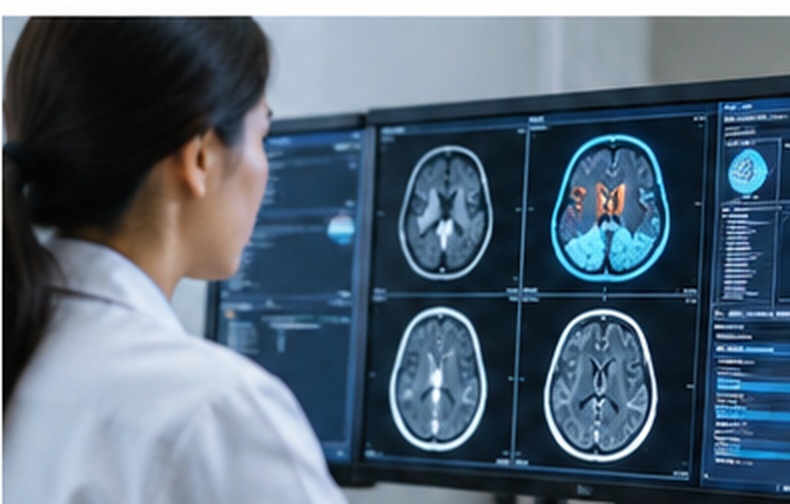
One of the clearest applications is medical imaging. Radiologists examine X-rays, CT scans, MRIs, mammograms, and other images for signs of disease. AI systems can be trained using large sets of previously analyzed images so that they learn to identify visual patterns associated with conditions such as tumors, fractures, lung disease, or internal bleeding.
The important point is that the system does not “understand” illness in the same way a doctor does. It recognizes statistical patterns in the image. If an area looks unusual, the software can flag it for closer review. In a busy hospital, that can help doctors prioritize urgent cases or provide a useful second opinion.
This is especially promising for diseases in which early detection matters. A small abnormality that is difficult to notice may become easier to recognize when an AI system has been trained on thousands or millions of examples. The final interpretation, however, still needs clinical judgment. A scan is only one part of a patient’s story.
Using Data to Predict Risk
AI can also work with information that is not an image. Hospitals increasingly use electronic health records that contain blood-test results, vital signs, diagnoses, prescriptions, and other information. By examining how these measurements change over time, AI models can sometimes identify patients whose condition may be worsening.
For example, a system might notice a combination of temperature, heart rate, blood pressure, and laboratory changes that has appeared in previous patients before a serious complication. The software can then alert the medical team to take a closer look. The value is not that the computer has “diagnosed” the patient. Its value is that it can monitor many variables continuously and recognize combinations that deserve attention.
Personalizing Treatment
Another growing area is treatment selection. Patients with the same diagnosis do not always respond to the same medicine in the same way. Differences in age, genetics, other illnesses, lifestyle, and previous treatment can all matter. AI can help researchers and doctors analyze these factors together.
In cancer care, for example, researchers are exploring systems that combine information from medical images, pathology reports, and genetic tests to help identify which treatment options may be most promising for a particular patient. Similar approaches are being studied in cardiology, neurology, and other fields.
This does not mean that medicine becomes a simple computer calculation. Real patients have complex needs, and medical decisions involve risks, values, and personal preferences. AI is most useful when it gives professionals better information rather than attempting to replace professional responsibility.
The Limits Matter as Much as the Benefits
AI systems can make mistakes. If the data used to train a model do not represent the full range of patients it will encounter, the system may perform better for some groups than for others. Poor-quality records can also produce poor predictions. In addition, a model may identify a statistical relationship without explaining the biological reason behind it.
Privacy is another major concern. Medical information is among the most sensitive data a person has. Hospitals and technology companies must protect patient records, control access, and explain when automated systems are being used.
For these reasons, the safest future is not “AI instead of doctors.” It is AI used under human supervision. A well-designed system can handle repetitive comparison, monitor large datasets, and highlight unusual patterns. Doctors can then combine that information with examination, experience, communication, and judgment.
A More Human Use of Technology
Paradoxically, one of AI’s most valuable contributions may be giving healthcare professionals more time for people. Doctors and nurses spend substantial time reviewing records, writing notes, and searching for information. If carefully designed AI systems can reduce some of that administrative burden, clinicians may have more time to explain choices, listen to concerns, and build trust with patients.
The most important question, therefore, is not whether AI can become “smarter than a doctor.” It is whether technology can make healthcare more accurate, timely, and humane. In the best applications, AI remains in the background: finding useful signals, organizing information, and helping trained professionals make better-informed decisions.
B. Jin