Smarter Farms: How AI Is Changing Agriculture
Farming Has Always Been a Data Problem
Farmers have always made decisions by reading signals from the land: the color of leaves, the moisture of soil, the timing of rain, the appearance of insects, and the growth of crops. What has changed is the amount of information that can now be collected. Sensors, satellites, drones, weather stations, and farm machinery can generate data across an entire field, sometimes every day.
Artificial intelligence helps turn those observations into decisions. Instead of asking a farmer to examine every plant individually, software can analyze thousands of images and measurements and highlight areas that may need attention. The goal is not to remove the farmer from the process. It is to make a very large and complex environment easier to understand.
Seeing Crop Problems Earlier
A plant often shows visible signs when it is stressed. Leaves may change color because of disease, insect damage, lack of water, or nutrient problems. AI-based image analysis can help identify these patterns from photographs taken by drones, tractors, smartphones, or fixed cameras.
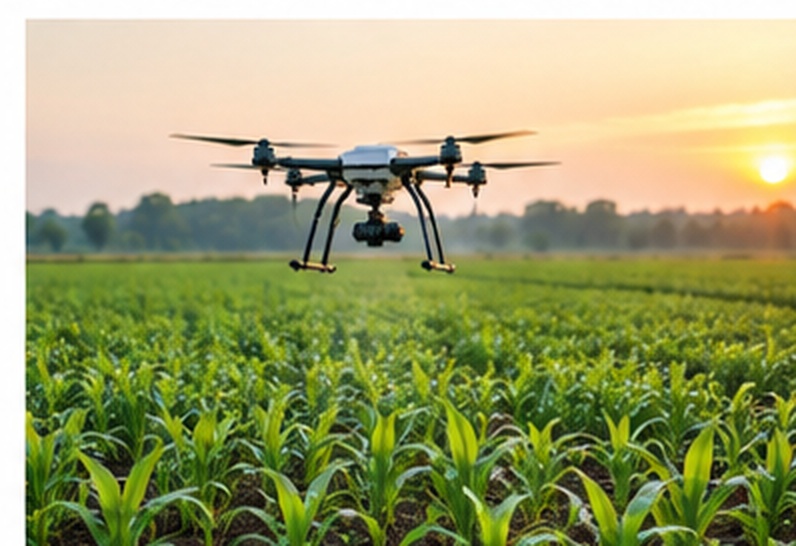
A drone flying over a field, for example, can photograph areas that would take a person hours to inspect on foot. Software can compare color, shape, and growth patterns across the field and produce a map showing places that look different from surrounding crops. A farmer can then visit those specific areas and determine what is happening.
Earlier detection can make a practical difference. A disease that affects a small section of a field may be easier to control before it spreads. A broken irrigation line can be fixed before a large area becomes dry. AI does not solve the problem by itself, but it can shorten the time between the first warning sign and human action.
Using Water and Fertilizer More Precisely
Traditional farming sometimes treats a large field as though every part of it were the same. In reality, soil conditions, drainage, sunlight, and crop growth can vary considerably within a few hundred meters. Precision agriculture uses data to manage those differences.
AI systems can combine soil-moisture readings, weather forecasts, crop images, and previous harvest information to estimate where water or fertilizer is most needed. Modern irrigation and application equipment can then target particular areas instead of applying the same amount everywhere.
The potential benefit is straightforward: produce healthy crops while wasting fewer resources. Water conservation is increasingly important in drought-prone regions, while excessive fertilizer can increase costs and contribute to pollution in rivers and groundwater.
Smarter Machinery
Farm equipment is also becoming more automated. Cameras mounted on tractors can distinguish crops from weeds, allowing spraying systems to target individual unwanted plants rather than treating an entire field. Harvesting machines can use computer vision to estimate ripeness or identify fruit that is ready to pick. Autonomous or semi-autonomous tractors can follow planned routes with high precision.
These machines still operate in unpredictable environments. Mud, dust, changing light, animals, people, and irregular terrain make farming more difficult than operating a robot inside a controlled factory. That is why reliable sensors and human oversight remain important.
Predicting What Comes Next
Agriculture depends heavily on the future. Farmers must decide when to plant, irrigate, protect crops, and harvest, often without knowing exactly what the weather will do. AI can help analyze historical weather records, local forecasts, crop growth, and soil conditions to improve these decisions.
At a larger scale, similar systems can help estimate crop yields. Governments, food companies, and farmers can use better forecasts to plan storage, transportation, and supply. This can be especially useful when drought, flooding, or unusual temperatures threaten production.
Technology Is Not a Substitute for Local Knowledge
AI agriculture also has limits. A model trained on one crop or climate may not work well somewhere else. Small farms may not be able to afford expensive sensors or equipment. Internet access can be unreliable in rural areas, and farmers need systems that are practical to maintain rather than impressive only in demonstrations.
Local experience remains essential. A farmer who understands the soil, weather, pests, and history of a particular field has knowledge that may not appear in a dataset. The strongest approach combines that experience with useful technology.
Used carefully, AI can help agriculture become more precise rather than simply more automated. The promise is not a farm without farmers. It is a farm where people can see problems sooner, use limited resources more wisely, and make better decisions in an increasingly uncertain climate.
Boyu Jin