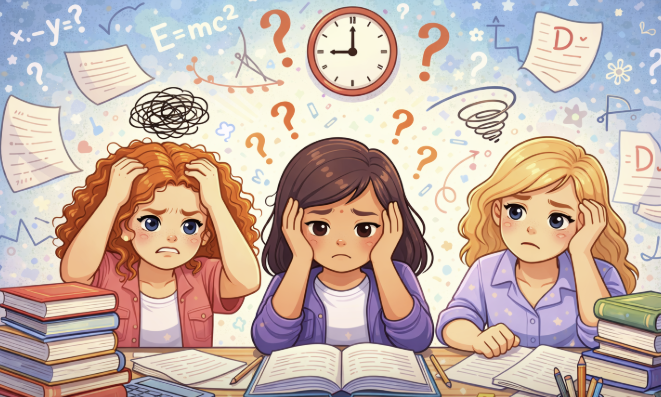
Sometimes, academic pressure can be extremely heavy for children, such as a high school girl. At this age, it should be a time of youth and curiosity. However, for many girls in their adolescence, they are often enveloped by the pressure of study. The pressure of academic competition, coupled with the inability to communicate with parents in a timely manner and relieve emotions, makes anxiety and tension a daily occurrence for many girls.
In the campus, the pressure of study is like a rope, and we need to keep a clear mind all the time to study. From morning reading to evening self-study, everyone believes that scores are the standard to measure their own value. The expectations of teachers and parents for grades make many girls dare not slack off. If they perform poorly in the exam, they will feel very tired when facing the lectures of teachers and parents and fall into the trap of selfdoubt.
Some girls may even fall into long-term anxiety, and their lack of confidence may lead to being very cautious when communicating with classmates, teachers or parents.
When these girls encounter psychological distress, they usually find it difficult to communicate and confide effectively with the outside world. The school’s psychological counseling room is either open for limited hours or the teachers merely offer simplistic
advice. Parents typically focus more on academic performance than their children’s mental well-being and may even think that their children are just being overly sensitive. Over time, the children’s emotions accumulate, and some girls may fall into a prolonged state of depression and even develop negative thoughts about life.
The psychological issues of these girls are not affected by sentimentality; they are real problems. I believe that schools should not only focus on students’ academic performance
but also pay more attention to their psychological growth. Parents should learn to listen to their children’s inner thoughts, offer understanding and support, so that the children can get
out of the psychological shadow and regain the sunshine and vitality of their youth.
Wendy Hou